
What’s on your mind: the most-read brain circuits of 2025
Our regular series of short articles on the most pressing issues of the moment attracted a good deal of attention this year. Here are the 10 you viewed the most – including...

by Tania Lennon Published February 27, 2024 in Brain Circuits • 3 min read
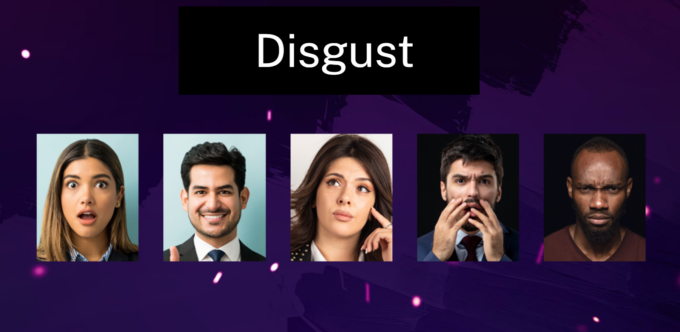
Click here to play the Emotional Code game.
Match each word prompt with the corresponding face expressing that emotion.

How well could you read the expressions in the Emotional Code game? The game tests your social judgment — that is, your ability to distinguish and recognize other people and their emotions. Social judgment is important to us as leaders because our problem-solving takes place in a social context where we must make sense of others and the social systems in which they operate.
Social judgment is part of a broad range of cognitive abilities that enable people to understand and interact with others. Leaders need to inspire, motivate, and enable others to perform. Social judgment enables us to create a community, fostering collaboration and connectivity. Social judgment is also important to support reputation management, as it enables us to monitor how our actions are perceived by others.
The Emotional Code game tests your ability to tune into the feelings of others. This is integral to emotional intelligence, which includes the capacity to identify emotions and understand their origins and implications. (Mayer et al, 2000). Stein et al (2009) found that emotional intelligence was related to profitability and that leaders with more of it were respected by others for their ability to manage people and organizations.

What can leaders do to boost their interpersonal insights? Here are three suggestions:
These approaches are all designed to enhance neural processing to internally simulate the effective and cognitive mental states of others. This is also known as the theory of mind, where the feelings of others are inferred and understood.

Executive Director of the Strategic Talent Development initiative
Tania Lennon leads the Strategic Talent team for IMD. She is an expert on future-ready talent development, including innovative assessment methods to maximize the impact of talent development on individual and organizational performance. Lennon is a “pracademic”, blending a strong research orientation with evidence-based practice in talent development and assessment.

December 16, 2025 in Brain Circuits
Our regular series of short articles on the most pressing issues of the moment attracted a good deal of attention this year. Here are the 10 you viewed the most – including...

December 11, 2025 • by Ginka Toegel in Brain Circuits
AI has the potential to become a super-useful teammate, but CHROs must manage its deployment with care. Answer the questions below to check how employees feel about its adoption and watch out...

December 9, 2025 • by Francesca-Giulia Mereu in Brain Circuits
We’re all familiar with fight, flight, or freeze stress responses. But clinical psychologist Ingrid Clayton identifies a fourth survival strategy lurking in your neural circuitry that most leadership training misses – and...

December 4, 2025 in Brain Circuits
A skills-powered approach to talent management can boost agility, efficiency, and productivity, but transitioning to it is a complex undertaking. Ravin Jesuthasan explains how to get started and identifies the eight pillars...
Explore first person business intelligence from top minds curated for a global executive audience